Wednesday, 23 December 2015

Jesus as Saviour and Healer

Witnessing to Christ often means moving away from our theological language and expression - eg  Jesus died on the cross for you. I like this explanation of Jesus as Savior given by Fr. Laurence Freeman, Spiritual Director for the World Community of Christian Meditation. Enjoy!


For some people, those whom Jesus calls to be disciples, the
experience of His message enters into us and we move to another level of relationship with Him. This is where, you might say, we begin to experience Jesus as Savior. The word Savior means healer. The early Christians spoke of Jesus very often as the Divine Physician.

He heals us of the wounds of sin, of the wounds of our suffering, the wounds of humanity. No one gets very far in life without being wounded, without being hurt, without having their self-esteem damaged or their hope disappointed, or their love rejected, or without the experience of betrayal. Being let down. No one gets very far without being hurt.  And those hurts that life give us can run very deep into our psyche.  And then to deal with those wounds, we often build walls to protect ourselves: ‘This isn’t going to happen to me again. I’m not going to put myself in that position again.’ So we start to get hardened hearts; we start to build up resistance to love, resistance to other people. We become more isolated, less trusting. Then we wonder why we’re sad. This is where we need healing.

For some people, who we could call the disciples of Jesus, the experience of His teaching enters into us and begins to heal us of those wounds. It may be through any number of ways; maybe through scripture, maybe through friends, maybe through an inspired spiritual teacher, maybe through the sacraments. 


Different ways for different people. He gets in in all sorts of different ways. He’ll find a way under the door, even if we’ve locked the door. When we begin to sense that we are feeling better as a result of this relationship with Jesus, we begin to feel more self-acceptance and wholeness. We begin to see how we can relate to other people more lovingly. We’re capable of forgiving the hurts that people have put upon us, and letting them go. We’re capable of more compassion. We’re capable of being more patient with ourselves even though we have lots of problems and lots of faults, but we don’t beat ourselves up all the time.

These are the ways in which we begin to experience the saving and healing work of Jesus. It’s gradual. There may be dramatic moments, but it’s gradual and it is irreversible. It’s not like the pills you take when you’ve got a toothache, a temporary relief of pain. It’s a curing, it’s a healing. 

In the gospels, Jesus is often shown as a miraculous healer, but again, he didn’t want his disciples advertising him as ‘Jesus the miraculous healer’.  He told them not to promote Him like that. In many of those healing stories, He heals by touching; and He still heals us by touching us. There is an interior touch, a spiritual touch which heals when his power comes into us.

As we begin to recognize Jesus in this way, as our Savior, as one who heals in our life, our relationship with Him has moved to a much deeper and more personal and intimate one. He’s no longer just a great spiritual teacher of humanity but we now have a personal, mysterious, experience of Him, and it will be expressed in different ways by different people.

Fr. Laurence Freeman 
Spiritual Director for World Community of Christian Meditation 

Tuesday, 22 December 2015

Continuing My Early Faith Story

We have each experienced milestones in our lives, events that give rise to radical change in our outlook on life. In my first posting, I shared with you about my early spiritual life and values up to the time I was baptized.  In this posting I would like to continue with my faith story during my early post-baptismal years. 

When I was twenty-seven years old, I remember reading an article in a business magazine called:  “Career Success!  Personal Failure!”  It was an article about the dilemma experienced by many people in business pursuing a career for the purpose of attaining success, recognition, achievement and financial security.  The author of this article pointed out that despite the successes of many people in accomplishing their goals, they nevertheless continued to feel that they were failing.  They continued to carry, within themselves, a sense that something was missing from their lives.  


When I read this article, it related so much to what I was feeling.  Although I was fairly successful with my career, and accomplished many of the things that I set out to do, I was still unhappy and very dissatisfied with myself.  The things that I desired and thought would fulfill both my outer and inner needs were failing me, and left me with this question as to what I might be doing wrong.  Although this was a painful concern at the time, I see now that much good came from this time of trial.  It's only when we feel the pain of the moment that we have the courage to look within ourselves and admit that something is wrong. The pain I felt gave me the courage to begin to look at my beliefs, to examine their source, and then to make the necessary changes that would lead in a more positive direction.  This discernment would eventually change the direction of my life, and lead me into areas not previously imagined.

Growing up farm was a great place to be as a child; however, our family did suffer financially.  My early life witnessed this struggle, particularly with my parents, who worked very hard, but had trouble making ends meet.  Although these were happy years, I did receive a lot of reminders, particularly from my mother, about the importance of education, and pursuing a career, and having a secure job. 

When I finished high school, I approached my career and early working life with a deeply engrained belief that my happiness and well-being depended principally upon what I could accomplish for security.  This was what I believed, and this is what I pursued.  And it really took me by surprise, several years later, to discover that all of those things I was accomplishing did not bring the happiness that I expected.  

In writing this, I am not suggesting that there is anything wrong with success, recognition, achievement or financial security.  Gerald May, in his book “Will and Spirit” stresses that the wholeness we seek is comprised of two needs; our need for meaning and purpose, and the need for belonging and love. 

Meaning and purpose in life will result from moments of success, recognition and achievement.  There is a sense of mission and growth that we experience from our efforts in this area.  However, if our primary focus and attention is only in that area, then we may sub-consciously deny the fact that that we also have as great a need for belonging and love.   Without the fulfillment of this latter need, our lives will feel incomplete on another level.  

In my mid twenties, I did not know this.  I was beginning to discover that, although my efforts were bearing fruit in one way, in other ways they were failing.  The pain of this experience was for me Providence’s way of saying that a change was necessary.  I needed to begin to take the time from my preoccupations with success, and make some shifts that would lead to a feeling of greater wholeness. 

My search brought me too many exciting authors who spoke to me through their books.  The one who had the most impact at me at this young age was John Powell SJ.  His light psychological approach to dealing with relationship issues
appealed to me as I gobbled up his books:  “He Touched Me”, “Why Am I Afraid to Tell You Who I Am”, “Reason to Live Reason to Die”, “The Secret of Staying in Love”, “Fully Human Fully Alive” and the list goes on.  It was through these books that I discovered I had difficulty in loving.  Although I was growing in awareness of the importance of love, and loving relationships, it became increasingly clear to me that what I understood in my head was not as strong in my heart. Inside, I experienced a deep sense of isolation and alienation that kept me at a distance from others. I was functioning well in my working relationship, a good listener to other people’s concerns, but revealed little about myself.  I thought that if anyone knew who I really was inside, (the darkness, fear, and doubt) I would be immediately rejected.  Therefore, it was best to keep such things to myself.  

Fortunately for me, my faith was growing stronger, and I began to turn to God to seek a path that might lead me away from my painful dilemma.  

Christmas Greeting From Catholic Grandparents Association

Sent: Monday, December 21, 2015 3:14 PM

Subject: Grandparents News December 2015


Dear Ronald

Wishing you a Joy filled, Blessed and Peaceful Christmas.

We hope that you will enjoy reading it and also will be able to pass copies onto others who you may know. It is wonderful also if you could get a copy printed for your local parish or, perhaps, for those who don’t have access to the internet.

The work of the CGA continues to spread across the world. We are entirely supported by donations and it is through the generosity of our members that we are able to further our mission and purpose in keeping Prayer at the Heart of the Family and in passing on the Faith. 

Your sincerely


Founder of The Catholic Grandparents 

Monday, 21 December 2015

Notes Taken From Archbishop On Witnessing

During one of the presentations by Archbishop Mancini on the building blocks of the New Evangelization, the followings notes were taken as it relates to being witnesses to our faith. This may be of particular interest to Grandparents who wish to share their faith within the family context. 


If we are to be a disciple of Christ, a follower, then we must also be a witness. We must possess within ourselves a sense of our own story or personal testimony. We profess that we are Christian. We profess that we are a follower of Christ. What goes out from us that gives witness to that? If we have a relationship with Christ, how has it changed us?

This can be experienced at various levels. The first level of witnessing is usually expressed in the way we live. Through the way we live, we convey to those around us, who we are and what we believe. This is living our faith. 

Now there’s another side of that. Through the way we live, we also convey who we are not. As a result, this does not, by itself, completely convey the Christian message. Living by example is usually not enough.

So that moves us to the area of witnessing in other ways. What is witnessing? 

First of all, perhaps we should look at what it is not. Think of a court situation. In witnessing, we do not become the judge. In witnessing, we do not become the policeman, or the arresting officer. In witnessing, we are conveying to another what we have seen, what we have heard, what we have experienced. And when we witness to our faith in Christ, we focus on our experience as it relates to our encounter with Christ. 

In 1st Cor. 2:1-5, St. Paul says: 

“When I came to you, I did not come proclaiming the mystery of God to you in lofty words or wisdom. For I decided to know nothing among you except Jesus Christ and Him crucified. And I came to you in weakness and in fear and in much trembling. My speech and my proclamation were not with plausible words of wisdom but with a demonstration of the Spirit of power so that your faith might rest not on human wisdom but on the power of God.”


To St. Paul, witnessing is proclaiming the power of Christ.

Perhaps witnessing could be described as the sharing of what we’ve seen and what we’ve heard from our own experiences. What has Christ taught you? What has Christ done for you? Do you have life experiences of moments of your own death and resurrection?

Tertullian defines grace as "the awareness of the fact that I am acceptable by God despite my unacceptability."  Can we imagine the New Evangelization to be like an AA meeting. Joe comes forth during the meeting, and introduces himself: "My name is Joe. I’m an alcoholic."  And the community responds: "Good evening Joe. Welcome to our meeting." Grace becomes an awareness of the fact that I am acceptable despite my unacceptability. This awareness that we are acceptable despite our unacceptability gives us cause to witness to the goodness of the transforming presence of Christ.

Being a witness makes us ambassadors of Christ. An

ambassador is one who is called to represent, or to be a witness for the other.

Thursday, 17 December 2015

A Grandfather's By-weekly Blog

I must begin the process of entering the social media world with a confession, namely that I know very little about how it operates, and therefore I am relying on the Len’s expertise to coach me along until I gain some proficiency in the system. With this in mind I will begin with a bit of personal family history.


Religion and church has been an integral part of my life as far back as I can remember, and for my first 20 years it was often a point of heated discussion in my family, resulting in strained relations and much internal tension. Fortunately however, I attended two churches during this growing up time; a Catholic and a United Church.  Both, I must admit, were a source of quiet, belonging and peace, and I was happy to attend. 

My early life, in those days, was probably a little different from anybody else born into a “ mixed marriage” with a compassionate and accepting Baptist Mom, a lapsed Catholic Father, who I think was a bit guilty about his distance from the Church.  A kind and compassionate Grandfather and a rigid but loving Irish Grandmother, both staunchly Catholic, hovered in the background, forming a mixture of relationships that often resulted in tension filled family discussions about my religious life. 

In the interest of brevity I shall focus on my Grandfather. Subsequent BLOGS will expand on other aspects of my religious life.


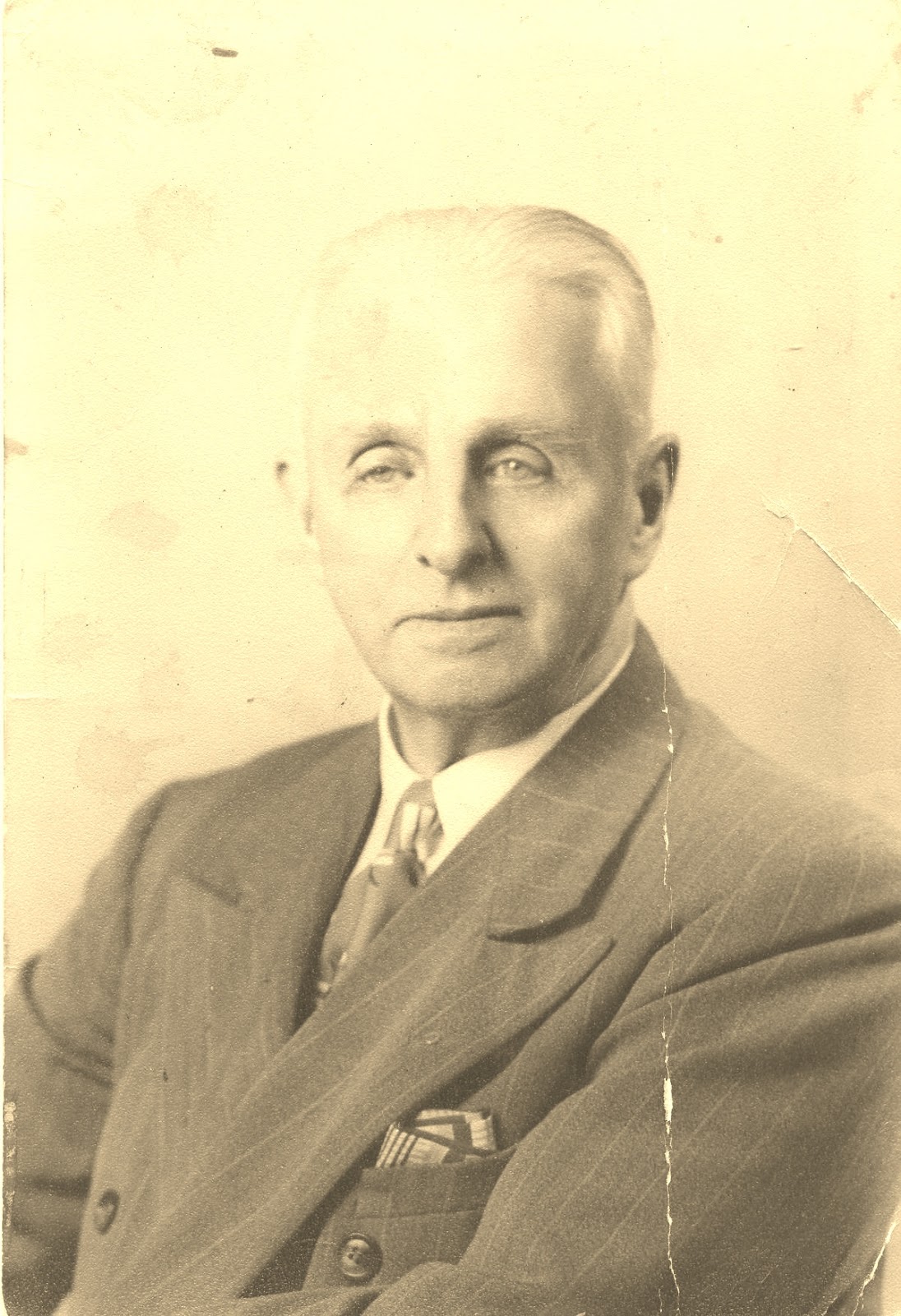
Readers of this BLOG will have no difficulty in understanding that all of this religious tension and activity in the life of a young male growing to manhood was tumultuous to say the least.   But through years of internal family bickering, my Grandfather was the quiet voice, a gentle man who said little, but was a shining example of a Christian by the way he lived and interacted with others …an attitude for others, regardless of background or state in life, that he acquired as a medic in the front line battles of the first world war in France and Belgium.  This example of a grateful Grandparent living his life in a Christ-like way slowly and unconsciously penetrated my inner self, and became a major influence in my eventual choice to convert to Catholicism.  This remains as a force in my present life as well.


Future BLOGS will expand on Grandparents in the church of today.


Ron Beed


Tuesday, 15 December 2015

Catholic Grandparents and the Multimedia


The purpose of this posting is to describe to the members of the Nova Scotia Catholic Grandparents how we are using the multimedia (various internet platforms) to assist in meeting the objectives of the group.  Please read the first posting (letter to the Archdiocese re Catholic Grandparents) for a summary of the objectives of this group.

Blog Platform
First of all, our group will be using a blog for the purpose of sharing stories, a personal faith legacy, or communications such as this posting. This blog has been established using the Goggle platform.  The Google platform contains many features: e-mail under the prefix “gmail”, goggle interactive groups, and blogging to name a few.  The e-mail for the Nova Scotia Catholic Grandparents group is: rcatholicgrandparents@gmail.com.  Anyone wishing to make a posting to this blog can do so by sending it via attachment using this e-mail address.  The blogger administrator can then copy it into a blog posting.   

The blog itself has the name Nova Scotia Catholic Grandparents.  Once this name is googled, it will lead you to the blog postings; however, new blog postings and/or modification to existing ones cannot be done here.  This is a read-only public blog which anyone can see and read.

At the present time, only the blog administrators can make postings or modify existing ones within the blog.  This can be easily changed for members who wish to make their own postings simply by signing into the blog using above e-mail address and password which can be provided. 

Anyone can copy a blog posting to another internet platform like E-mail, Facebook or Twitter.  First go to the blog using the procedures described above.  All the blog postings are now available on one large scroll sheet.  Go to the posting you wish to copy and left click on the posting Title.  This posting now stands alone.  Go to the top left hand corner of your screen and find the link address for the posting.  It will start with “http”.  Right click (to highlight it) then left click “copy”.  The link for this posting is now in memory.  Go to Facebook or Twitter.  In the comment area, right click and then paste the link.  That posting is now available for your Facebook friends to read.  If you wish to send it to a single individual, it can be done by pasting it into an e-mail communication to that person on your contact list.

For those who would like to receive an e-mail notification of all the future entries to this blog, please enter your e-mail address in the "subscribe box" at the top right hand corner of the blog posting.  This is a means for you to keep in touch with all of the activity of this group, particularly if you do not use Facebook or Twitter. As mentioned above, if you wish to make a posting yourself, send your submission to the e-mail address shown above.


Facebook Platform (FB)
FB is the most commonly used internet platform.  Almost everyone is on it.  A FB group, under an administrator has been set up using the name: Nova Scotia Catholic Grandparents.  Right now, this is a closed group and only its members can see the postings.  Currently, any existing member can invite others from their FB community to join this group.   All postings from our blog will be displayed here using the copy/paste method described above.  This will probably be the primary area to share blog postings since it is the platform most commonly used.   Again, currently, only existing members can see them, but this can be changed to make them public.

Since all members of this FB group have access to these postings and their corresponding links, these can be copies and pasted into your own FB account for display to your FB friends or sent privately by way of FB messenger to another FB user.  This would be similar to an e-mail communication.


Twitter Platform
Twitter is the second most commonly used internet platform.  A group account has been set up in twitter under the name “CatholicGrandparents” with the hashtag “@CGrandparents”.  If you are a current twitter user, a search using either of these names will help you to find this group.  Current postings from the blog are also found here via tweets with the attached blog link.   Tweets can only be put on this group account by the administrator using the cut and paste features described above.  Anyone, however can read the tweets and activate the attached blog links, copy and paste the blog links into their own twitter account.  


If you are a twitter user, you can follow this group.  All of the group postings from “CatholicGrandparents” would then flow into the news-feed of your twitter account.  If you wish, you can favor them, or retweet them to your own followers or to a specific follower using their hashtag. Private communications are also available with other twitter users similar to an e-mail communication. 

I hope this is useful.  Be free to send an e-mail to rcatholicgrandparents@gmail.com if you have any questions.

Prepared by Len Moore

Sunday, 22 November 2015

Early History of Spiritual Life & Values

If we take the time to reflect on the events of our life, we will, in all probability, remember special times of wonder, which I refer to as “graced moments”. Many writers have spoken of these moments in their books and articles, and have usually described them as life changing, or moments of clarity and insight.

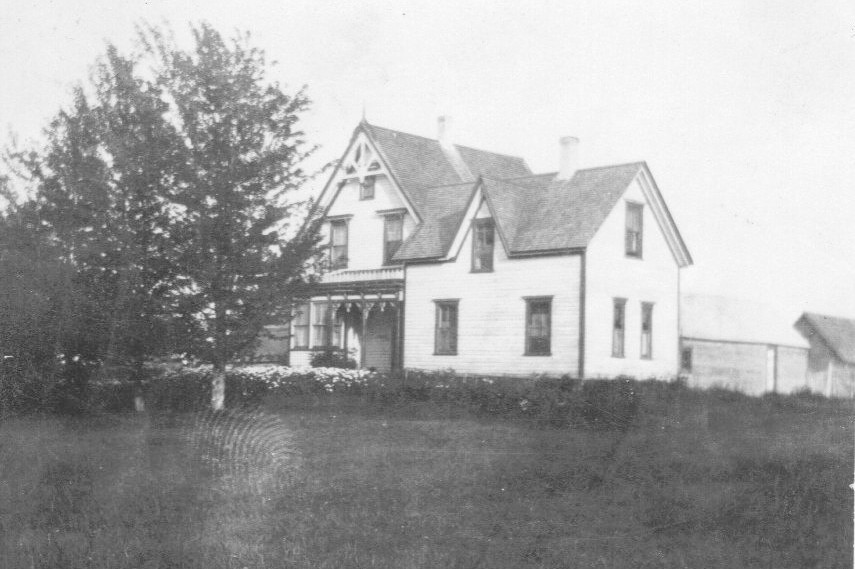
I have early memories of grace as a child and I would like to share with you one event that happened when I was nine or ten years old. I recall as vividly as today when it happened. It was early one spring morning after a good night’s sleep. I got up out of bed. No one was around. My parents were about their chores, and my other brothers and sisters were either off doing chores or still sleeping. I stepped out the front door onto the door step of our farm house where I lived.


My mind was still quiet from my sleep. I then experienced a moment of clarity, of awareness, that remains stamped in my memory today. The spring air was very still, and contained a refreshing warmth and fragrance. I could hear the running of the water in the near-by stream that was swelled by spring rains. The swallows were flying around the barns and I could hear the flapping of their wings. For several seconds that seemed much longer, I experienced being suspended in a harmony, a peace, an inner contentment and joy with everything around me. For those few seconds, it was as if time stopped. And I experienced within myself a moment of joy and peacefulness, but not about any particular thing. Beyond the beauty of what I saw and heard and felt, there was something more that cannot be named; something ineffable, something deep, inner, holy. It was a graced moment that still remains vivid in my mind today. It was a gift.

On looking back at the beginnings of my own conversion to Christianity, I am left with many positive memories of this somewhat magical time, and I count my blessings for the love and acceptance that I received during a time which could have been filled with grave concern and division. 


I was not raised in any faith practice. In fact, if anything, a belief and dependence on God was looked upon more as a crutch or an escape from reality rather than something of a positive influence. Although these concepts were not strongly enforced in our upbringing, they were nevertheless subtly present, and they were views that I also openly shared during my adolescent years. As not to present my early venturing into adulthood as entirely negative, my parents did instill in me a conviction that all people deserved to be treated respectfully regardless of their station in life, and life on the farm certainly taught by example the need we have for the people around us.

There is a connectiveness among neighbours that is much more evident in a farming community than in the city. And

this deep understanding of interdependence leads to a type of generosity and respect for others that might otherwise be obscured by a more independent lifestyle. Therefore, even though I carried with me a disconnection with the concepts of faith, faith practice, and God, I was blessed with a gentle acceptance of others and a respect for their beliefs, even when it was different from my own. 

One is always surprised with those special experiences of life that lead to a conversion of one’s attitudes and beliefs, particularly those that are deeply engrained. This certainly happened to me in relation to matters of faith and faith experience. It came about mostly by observing the faith qualities that I saw in others who became important to me. These faith qualities were not expressed to me, but lived out in their lives in a free and spontaneous manner.

For two years in my late teens and early twenties, while working and studying, I boarded with a family in the South End of Halifax, a Catholic family I grew to love and admire. They were the Clarks. This was perhaps my first exposure to parents who practiced their Catholic faith, and at the same time, did what was necessary to share that faith with their five children. I heard them speak about God to the children in the way that parents would speak to young children. I saw the rushing around on Sunday to prepare five active children for church. I grew in appreciation of their commitment to this task, and I admired their freedom and spontaneity in faith expression that came out in so many subtle little ways in our day-to-day encounters. All in all, I thought, that if a life of faith could make visible such admirable qualities, then something very good has and can happen from living such a life.


I also made good friends with a fellow boarder, Ron, who was in full time attendance at St. Mary’s University. He was my age, and also a Catholic who practiced his faith. His friendship meant a lot to me and I admired his strength of character, his outgoing personality, and his friendly accepting mannerisms. During the day our paths did not cross too much since he was attending university and I was working. But we did meet daily at the important times of sharing meals with the Clarke family. It was in the sharing of meals together that our friendship and mutual respect for each other grew. On Sunday evenings, I noticed that he would often return to the university. After weeks of observing this, I asked him what would be going on at the university on a Sunday evening. He told me that he attends a folk mass there with some of his fellow students. He asked if I would like to come sometime. I accepted his invitation. 


The folk mass instantly appealed to me with its up-beat music, homilies directed towards young people, and explanations of the liturgy that seemed designed just for me. I experienced the sense of community that existed among these young university students, and enjoyed their friendly and welcoming manners. I felt at home.

At this same time, I began to date a girl who would later become my wife. When Mary Anne finished high school, 
she had entered the Sisters of Charity at
Mount St. Vincent Motherhouse in Halifax. However, after further discernment, she decided to pursue a different path. By coincidence, she ended up working in the same office as myself. We instantly became friends, and after a year of working together, we began to date. Mary Anne was firmly rooted in her Catholic faith. I admired this conviction and wished secretly that I could be as convinced as herself of the importance of living a faith in God. We openly shared our own unique experiences and views on life, and the seeds of desire to share her faith experience begin to germinate.

It was through these initial encounters with faith in action that I began to desire to share in what they had, and through this desire I began to pray for faith. The act of praying would suggest a belief in God. Perhaps faith had already taken birth and I did not realize it. However, after praying for a very short time, faith became real to me and with it a desire to be a part of the Catholic Church. I asked my friend Ron about how to join the Catholic Church. He was excited about the prospect, and introduced me to a priest at the university, a Jesuit by

the name of Father Pianfetti. Father Pianfetti was a quiet and saintly man who instantly agreed to take on the task of providing the instructions that would lead to my baptism. On June 24, 1967, with Ron as my Godfather, and Mary Anne at my side for support, I was immersed into the waters of baptism, and become a member of the Catholic faith community.